
hitler Nazi Third Reich Animal ecology protection
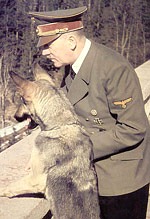
In total contradiction to the tyrannical and bloodthirsty acts of Hitler's Third Reich, the sensitivity for nature and animals of this government was reflected in the enactment of three protectionist laws: the law of animal protection (the Reichs-Tierschutzgesetz, 1933 ), the Hunting Act (Reichs-Jagdgesetz, 1934) and the law of nature protection (Reichs-Naturschutzgesetz, 1935). It's funny, but no coincidence "that this visionary environmental legal body was the first of its kind in history and has been given just under the totalitarian regime. The senior members of the NSDAP (Nazi) German were vegetarians, environmentalists and conservationists. It is common knowledge that Hitler loved his dog Blondi, but also, according to his biographers-not admit that smoking in his presence, and when he shared the table with people eating meat, were described in great detail the horrors of the slaughterhouse. In fact, he stated that "In the new Reich must not be room for cruelty to animals."
In his book The New Ecological Order, the French philosopher Luc Ferry argues that the Nazi concern for the environment is based on an aesthetic that unites the German people into a common sentiment:
... the beauty and feeling lost golden age are essentially ... original nature, wild, pure, virgin, real and irrational, accessible only through the ways of feeling. This original nature is defined as such even by his extra-human nature. Is exterior to man and before him - outside their mathematical reasoning and prior to the emergence of artificial culture of the human pride and folly are the only ones responsible. "
With this pan-Germanic idea of belonging to their own land, Nature (well, with capitals) was an example and base: the law of the jungle that prevails in nature, and the triumph of the fittest and the best is a genetic base in the Nazi ideology and propaganda. Thus, the leaders of the Nazi party had no duty to protect and defend this "natural nature" which is the source of the Germanic way of life. From then Nature was protected as a loving mother and welcoming, embracing the human being. So in protection law established the position of "natural monuments" as "original works of nature whose production results from a public interest motivated by their importance and scientific significance, historical, patriotic ...".
For their part, respect for animals is not in their utilitarian view from humans, but for its intrinsic value as a living. As for the Hunting Act, outlines the role of the hunter figure and as "the duty of a hunter worthy of the name is not just to hunt prey, but also support and care to produce and preserve a situation of the dam healthier, stronger and more diverse as the species is concerned. "
By reading and understanding of the concepts above, it is not difficult to understand why Nazi Germany under the protection of nature and animals were promoted and defended. Mother earth, forests, rivers, flora and fauna, should be well-preserved, human cruelty and pollution that began with the industrialization of the country. Save the refuge and support of the Aryan race was an inescapable duty. The paradox is that while environmentally protected areas were introduced, millions of political opponents were humiliated, gassed and killed in concentration camps. Luc Ferry is why insist on the need for the new ecology that has been formed, the same that promotes respect for nature itself, and the animals beyond the mere instrumentality for men, while respecting democráctica the institutions and people on the planet.

No hay comentarios:
Publicar un comentario